Federico Garcia was born and raised in Buenos Aires, Argentina. At thirty years old, he immigrated to the United States with a tenth-grade education, very little money, and no English — determined to build a new life from the ground up. He arrived working in a restaurant, then cleaning carpets for banks, before eventually building his own retail business, which he ran successfully for twenty years.
Starting over has been a recurring theme in his life. At forty-eight, he earned his GED. At fifty, he completed a bachelor's degree in five months. At fifty-three, he became a licensed private pilot. At fifty-five, he earned his MBA. Today he works for the State of California, continuing to build a career he once thought was out of reach.
Federico is the father of two children and lives in California. Part of his story includes recovery — he has been sober for twenty-six years — and that experience gives him a grounded, honest voice when he writes about faith, resilience, and starting over. But his writing spans much further than that single chapter: he writes about personal finance, education, faith, and family life, always from the same place — someone who has rebuilt his life more than once, and who believes it's possible to do again, one deliberate step at a time.
The views expressed in his books are his own.
Federico Garcia was born and raised in Buenos Aires, Argentina. At thirty years old, he immigrated to the United States with a tenth-grade education, very little money, and no English — determined to build a new life from the ground up. He arrived working in a restaurant, then cleaning carpets for banks, before eventually building his own retail business, which he ran successfully for twenty years.
You’ve replayed a two-word text like it was courtroom evidence. Driven back home to check a door you already knew was locked. Lost three nights of sleep over an argument the other person forgot by breakfast.
This isn’t a book from a therapist who’s never had a bad night of his own. It’s from someone who overthought his way through addiction, two...
Manage Triggers, Control Anger, Build Self Control, Strengthen Resilience, Grow Real Emotional Intelligence.
What if the problem isn’t that you feel the reaction—but what happens next?
You get a text and immediately assume the worst. Someone cuts you off in traffic and your heart starts pounding. Your boss dismisses your idea, you say nothing, and then you come home angry at the people you love. Your kid pushes one more button after a long day and your...
Break Free and Rebuild Your Life, One Day at a Time
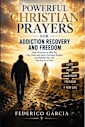
Recovery isn’t just about willpower; it’s about surrender, faith, and taking the next right step. In Powerful Christian Prayers for Addiction Recovery and Freedom, author Federico Garcia offers a daily lifeline to those battling addiction, overcoming relapse, and fighting to rebuild their lives....
Powerful Christian Prayers — Recovery, Family & Freedom Series
A bilingual collection of daily devotionals for anyone walking through addiction — whether it's your own recovery, or the recovery of someone you love.
Written from twenty-six years of lived sobriety, this...
My recovery did not happen in one clean attempt. I got sober, I slipped, I started again. Some nights the only victory I had was getting to bed without giving in.
What helped me most on those nights was not a big promise. It was a small one: not never, just not yet.
When a craving hits, I tell myself I can have the thought, but I will wait ten minutes before I do anything about it. Then I set a timer and use those ten minutes on purpose. I stand up. I drink a full glass of water. I walk outside...
In my day job I talk with people who are upset before I say a single word. When money is involved, voices go up fast, and the pull to match them is strong. Someone gets loud, and every part of you wants to get loud too, just to be heard.
Here is the tool I use: lower your voice one notch.
Not a whisper, and not a performance. Just a little slower, a little quieter, a little lower than the person in front of you. If they are at a seven, I go to a five.
For 35 years I believed one sentence: I'm not smart enough. I never argued with it. I just built my life around it.
So when I finally decided to sit for my GED at 48, my mind went to work. Too late. Too old. What if you fail and everyone knows? I could think about it for hours. What I could not do was open the book.
That is the sneaky thing about overthinking. It feels like preparing, but it is really a way of not starting.
What finally worked was shrinking the first step until it was too small...